

Description
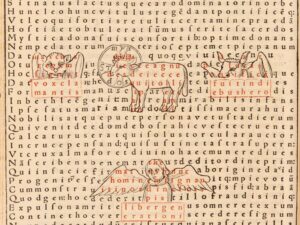
NATURALIS HISTORIÆ LIBRI XXXVII E CASTIGATIONIBUS HERMOLAI BARBARI… ac codicis in Alemania impressi quam emendatissime editi, addito indice quam copiosissimo, figurisque ad singolorum librorum materiam aptissimis. Prima pars Plyniani indicis editi per Ioannem Camertem minoritanum, sacre theologie doc. in qua (tabelle picte instar) mira litterarum connexione dicuntur ea omnia, geographiam praeter (nam hanc amplectitur pars altera) quae toto Plyniano volumine continent. – (Excussum Venetiis : per Melchiorem Sessam, & Petrum Serenae socios, 1525 die XXIIII Aprilis).
[Venezia : Melchiorre Sessa il vecchio & Pietro Ravani] (Impressum Venetiis : summa diligentia per Melchiorem Sessam, & Petrum Serenae, socios, 1525 die XXIIII Martii). Al colophon degli Indici di Camers (Excussum Venetiis : per Melchiorem Sessam, & Petrum Serenae socios, 1525 die XXIIII Aprilis)
Folio (310×220 mm.), 14, 219 (Historia), 72 cc. (Index by humanist Johannes Camers, 1447-1546); browned, few occasional grubby marks, a couple of corners with marginal loss, stained in places, mainly to index; page edges somehow thumbed, block edge worn.
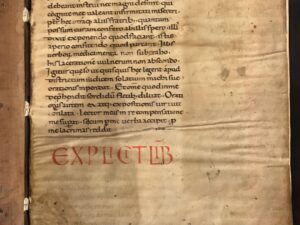
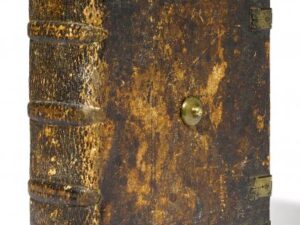
Coeval vellum binding with attractive manuscript fragments to covers.
Autori
Gaio Plinio Secondo (Plinio il vecchio)
Barbaro, Ermolao, 1454-1493. Umanista, poeta, traduttore ed insegnante di filosofia a Padova; fu ambasciatore di Innocenzo VIII che lo creò patriarca di Aquileia. Nato a Venezia nel 1453 e morto a Roma nel 1493.
Camers, Joannes, 1447-1546. Frate minore conventuale, umanista e teologo; nato a Camerino nel 1448 (o forse nel 1447), morì nel 1546.
Comments: